
A business enquiry rarely arrives as a complete brief. Someone sees a project on Instagram and asks, “Could you do something like this for us?” The useful response is a small bridge between that question and a decision. It helps the person explain the problem, helps your team assess fit, and gives the conversation an owner before it disappears beneath newer messages.
You can build this process without turning the inbox into a full sales system. Keep discovery proportionate, make the current offer easy to explain, and move detailed commercial work into the channels your business normally uses. The objective is an appropriate next step, including an honest decline when the work falls outside your service.
Prepare an offer reference before writing replies
Create a one-page reference that staff can consult while answering enquiries. Include the audience you serve, the problem you address, the deliverables, the important exclusions, typical project stages, and who can approve a proposal. Distinguish a service you currently deliver from an idea you might launch later. An enthusiastic reply should not accidentally create a new product.
For a website studio, “website refresh” might mean reviewing navigation and updating five existing pages. It might exclude a new booking system, photography and ongoing hosting. Those boundaries matter earlier than a polished sales script. A prospect asking for an online marketplace should reach someone who can assess that requirement, rather than receive reassurance based on the much smaller refresh service.
Invite a question the post can support
Give each post one relevant invitation. A demonstration of clearer navigation could invite viewers to describe the page customers struggle to find. A project case study could offer an explanation of the review process. Avoid “DM us to transform your business” when neither the post nor the offer explains what transformation means.
Write the public destination and the inbox response together. If a visitor can already read the scope or starting price on a page, make it available. Asking them to repeat basic information in a private conversation adds work without necessarily improving fit. Use the Instagram marketing action plan to assign responsibility for keeping the post, offer reference and destination aligned.
Use a short first exchange
Acknowledge what the person actually said, answer any clear factual question, and ask the smallest useful follow-up. The first reply should make progress even if the prospect never becomes a customer. Do not insist on a call before saying whether the service includes the feature they asked about.
Illustrative example: “Thanks for asking about the navigation project. We review existing service websites and propose a clearer page structure. What are visitors currently struggling to find on your site?” This explains the offer and asks for relevant context. It avoids assuming the visitor wants a complete rebuild or has authority to commission one.
- Known fit: Explain the next step and what it involves.
- Unclear fit: Ask one focused question about the missing requirement.
- Outside scope: Say so clearly and offer an appropriate resource or referral if available.
- Existing customer: Route the issue to support instead of counting it as a new lead.
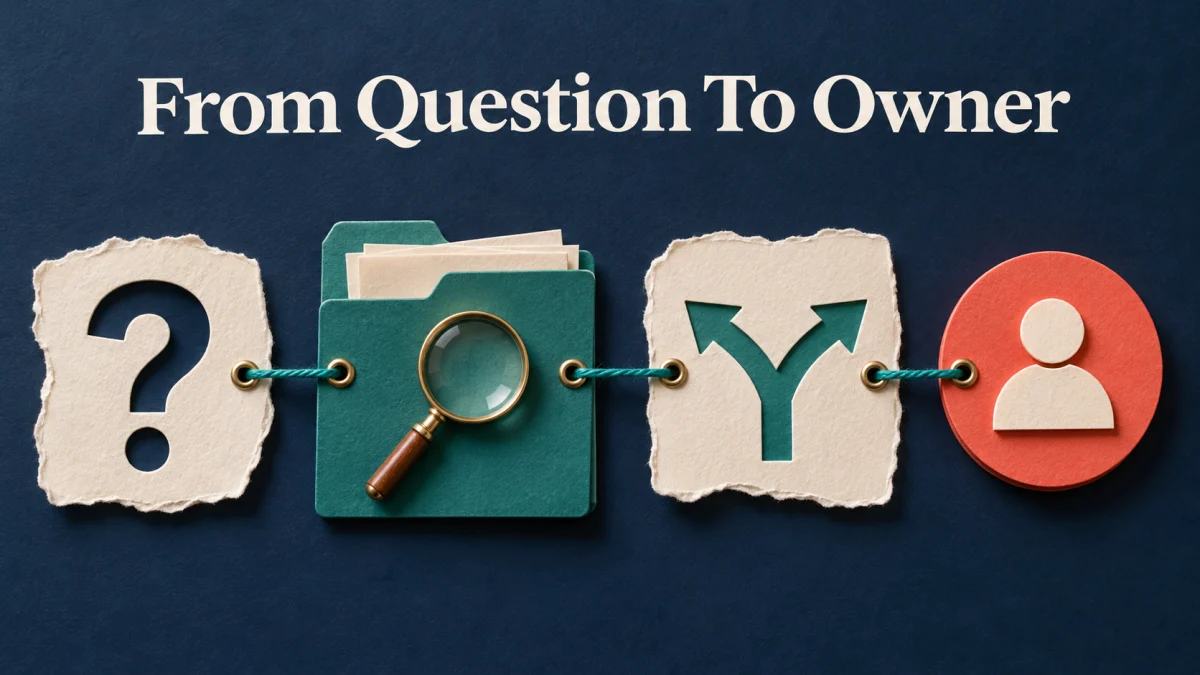
Gather decision information without requesting a dossier
Usually you need a description of the problem, a useful outcome and a practical constraint such as a launch date. Ask about budget only when it helps choose a realistic route, and explain the reason. Publishing a genuine starting range may answer the question more comfortably than asking the prospect to reveal a figure first.
Keep confidential records out of the initial exchange. A description such as “our enquiry page confuses distributors” can be enough to decide whether an introductory call makes sense. Customer lists, financial statements and account credentials belong in the business’s approved processes when genuinely required. The FTC’s data-security guidance supports collecting and retaining only information the business needs; the conversational questions here are practical suggestions.
If someone sends more than you need, stop expanding the request. Follow your organization’s process for handling sensitive material and explain the appropriate route for future documents. Staff should know whom to ask, rather than improvise a storage method in a personal device or forward the whole conversation to everyone.
Make the handoff a complete instruction
A good handoff names the purpose, owner, channel and expected next action. “Our project lead will review the three pages you identified and email you tomorrow” is more useful than “Someone will get back to you.” Use a response commitment your team can meet. If availability changes, update the person before the stated time passes.
When offering a consultation, explain what it can resolve and what preparation is necessary. When offering a proposal, establish who reviews the scope and where the authoritative version will be sent. Keep promises about delivery dates, discounts or outcomes within the authority of the person responding. The inbox can introduce an agreement; it should not contain conflicting versions of it.
Keep a lean enquiry record
Record the enquiry date, stated need, current owner, agreed next step, due date and outcome. A small team can start with its existing shared work system. Use factual statuses such as awaiting scope information, consultation agreed, referred elsewhere or closed. Avoid labels that guess motivation, such as “not serious,” merely because someone has not replied.
Separate public community activity from this private enquiry record. If your agency evaluates recurring engagement tasks, SMTasker’s agency workflow overview can inform that operating discussion. Keep the human enquiry owner and commercial handoff explicit; activity completed around an account does not establish that a business conversation has been qualified.
Agree how to handle a request that crosses services. If the website prospect also asks for photography, identify whether the studio delivers it, works with an approved partner or leaves it outside the proposal. Do not casually combine several suppliers into one promise. Tell the prospect who would own each part and which information remains provisional. This decision is especially important when the person answering the inbox has authority to discuss the main service but cannot commit another team. A clear boundary at this point prevents a useful first conversation from becoming an ambiguous multi-service agreement later.
Review one friction point each week
Read a small sample of recent enquiries and ask where progress became unclear. Repeated questions about scope may indicate a weak offer page. Missed handoffs may indicate an ownership gap. Many unsuitable requests may mean the invitation is too broad. Choose the repair that matches the evidence instead of simply increasing message volume.
For the next week, choose one service, prepare its reference, and have a colleague test the route with a realistic enquiry. Check that another staff member can pick up the record without asking the customer to start again. The free Instagram course preview provides a wider learning route while you apply this focused exercise to an actual offer.
Official reference
FTC: protecting personal information. Use this reference alongside the practical workflow above.